Building Careers Before Graduation: Inside the Grind, Discipline, and Growth of Two Young RNGD Project Engineers
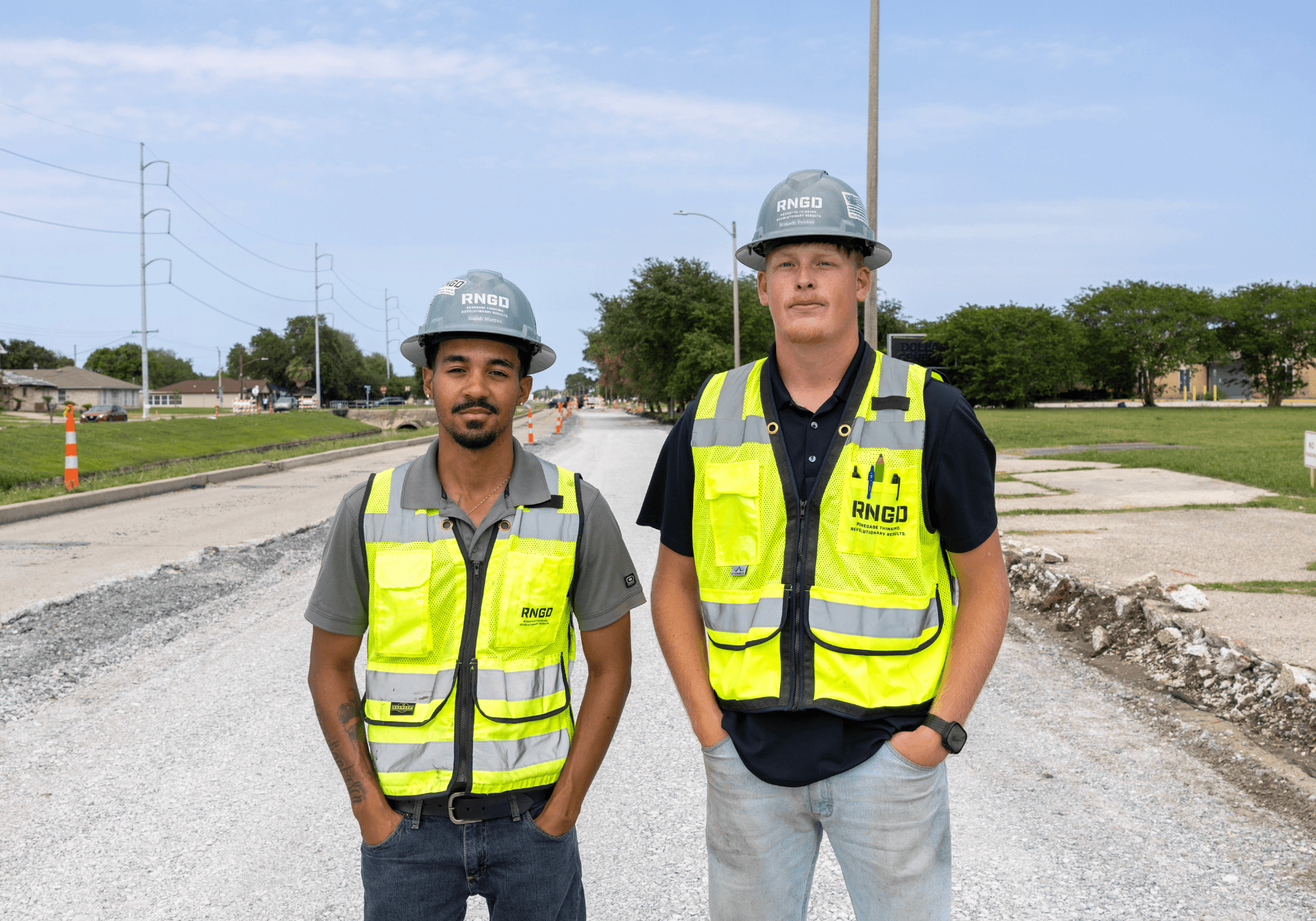
Two days before Makade Penton walked across the stage at his high school graduation, he showed up at an RNGD jobsite for his first day of work.
He was 18 and unsure of what came next. His dad, already established in his own career at RNGD, helped him land a temp spot through a labor service. The plan was simple and small: work the summer, save some money, figure out the rest later. Nobody told him the summer would change everything.
That summer, something clicked. Penton cut his teeth on the Desaix bridge project, spent his summer covered in concrete at Globalplex, stretched into seven-day weeks at Lakefront Airport, then drove piles at Bainbridge. “I fell in love with working and building things,” he said. By the time his friends were settling into freshman year and pledging fraternities, Penton was charting a different course. “Everyone else my age is living up their senior year summer,” he said. “I wanted to get ahead of them.”
Today, at 20, Makade Penton is a Project Engineer at RNGD. He’s also a second-year construction management student at Pearl River Community College in Mississippi, with plans to transfer to Southern Miss this fall. He works full-time. He goes to school full-time. There is no version of those two sentences that is easy.
He is not doing it alone.
The intern who didn’t leave
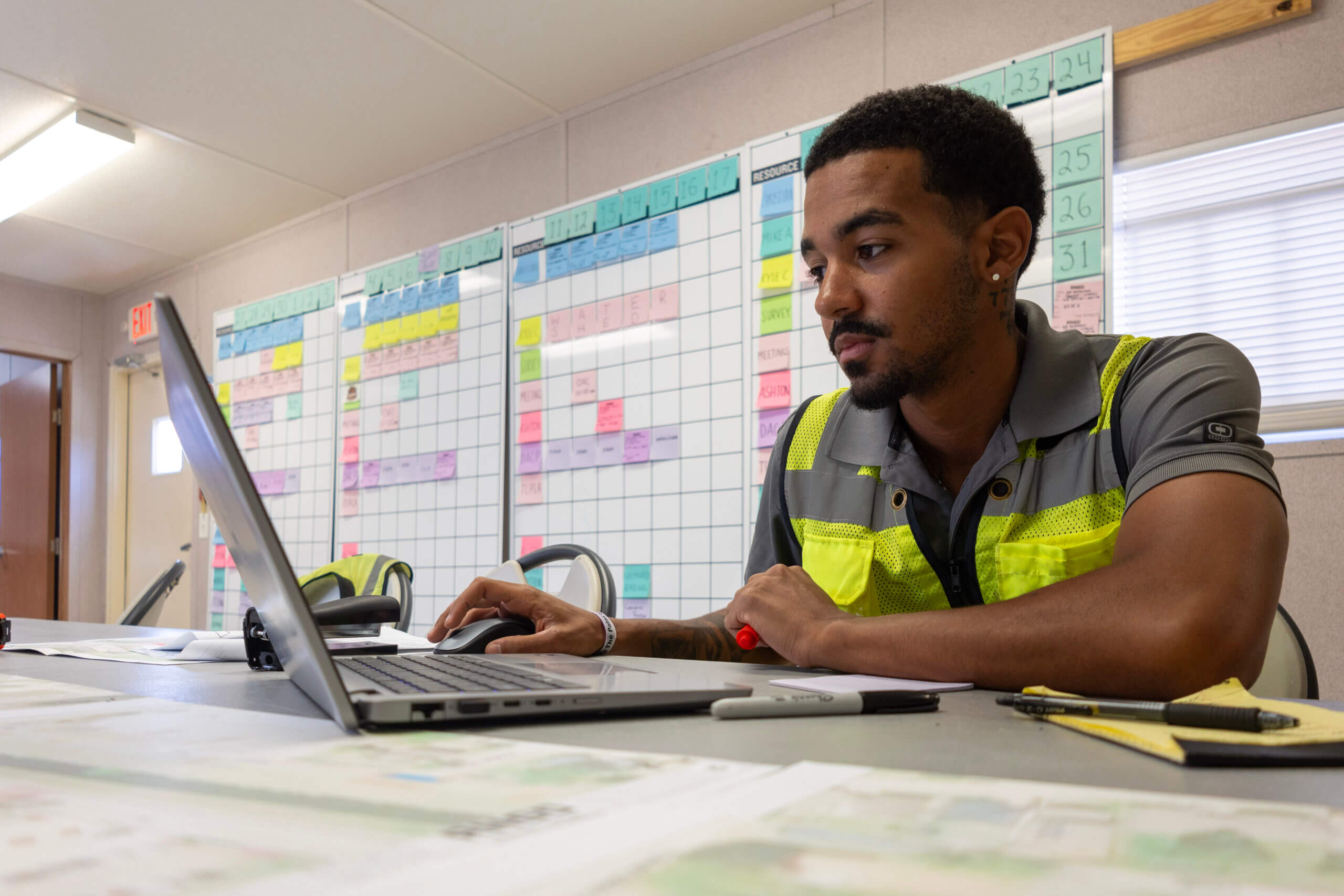
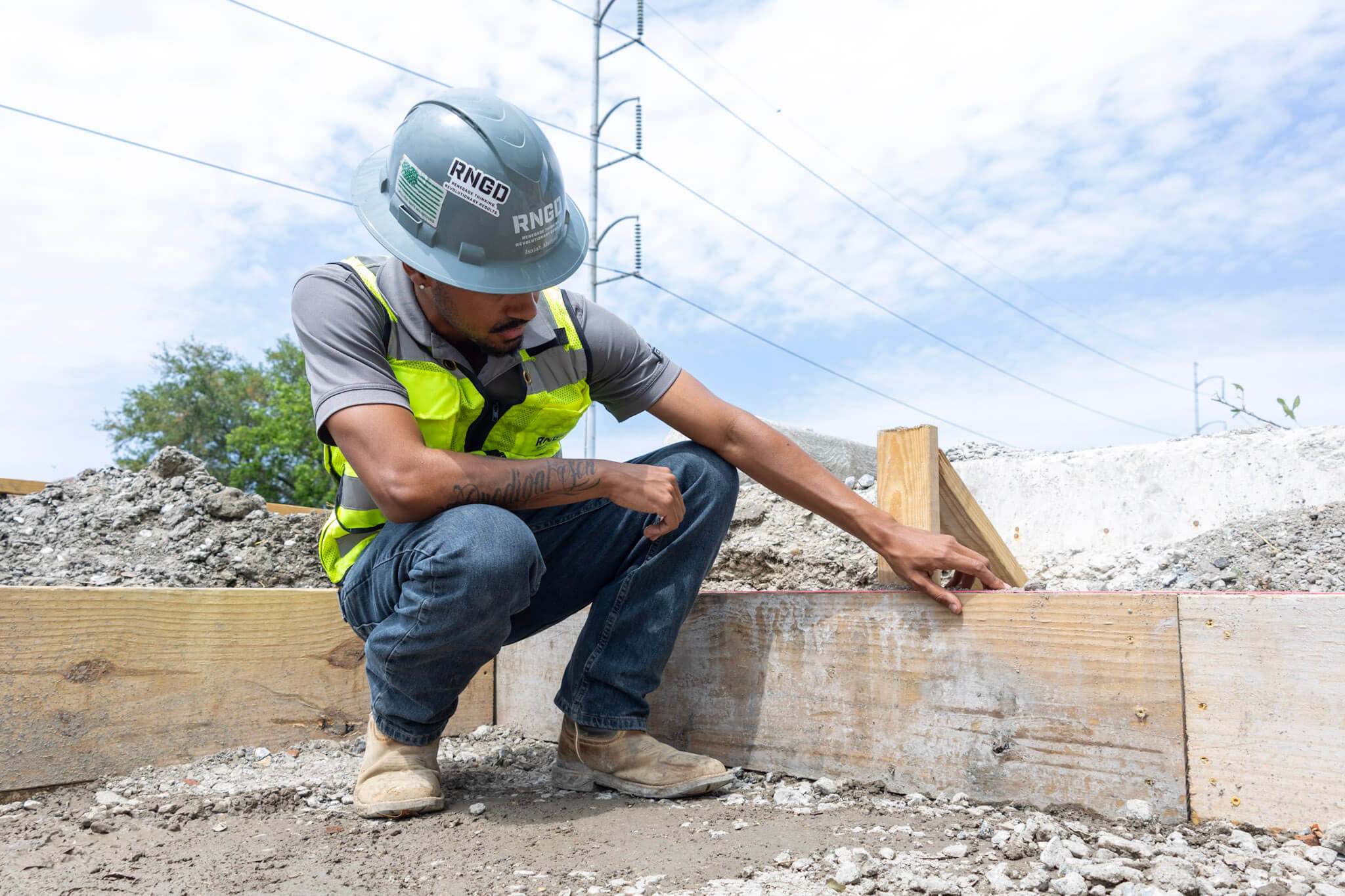
Isaiah Margan took a different road to the same crossroads. He came to RNGD in January as an intern, three days a week on site, two days at LSU, a junior in construction management trying to figure out if this industry would fit him. It fit. By summer, he was working full-time. He’s now 21, a Project Engineer running a pump station project, with a wastewater treatment plant for the Sewerage and Water Board next on his plate.
Ask him what changed, and he doesn’t talk about the work. He talks about himself.
“I noticed a big growth, not only in my knowledge of construction, but as a man,” he said. “Being able to give myself a routine, structure, come out of my shell, put myself in uncomfortable situations. As a person, it was making me better.”
That is the thing nobody tells you about doing both at once. The job teaches you construction. The grind teaches you who you are.
The cost of doing both
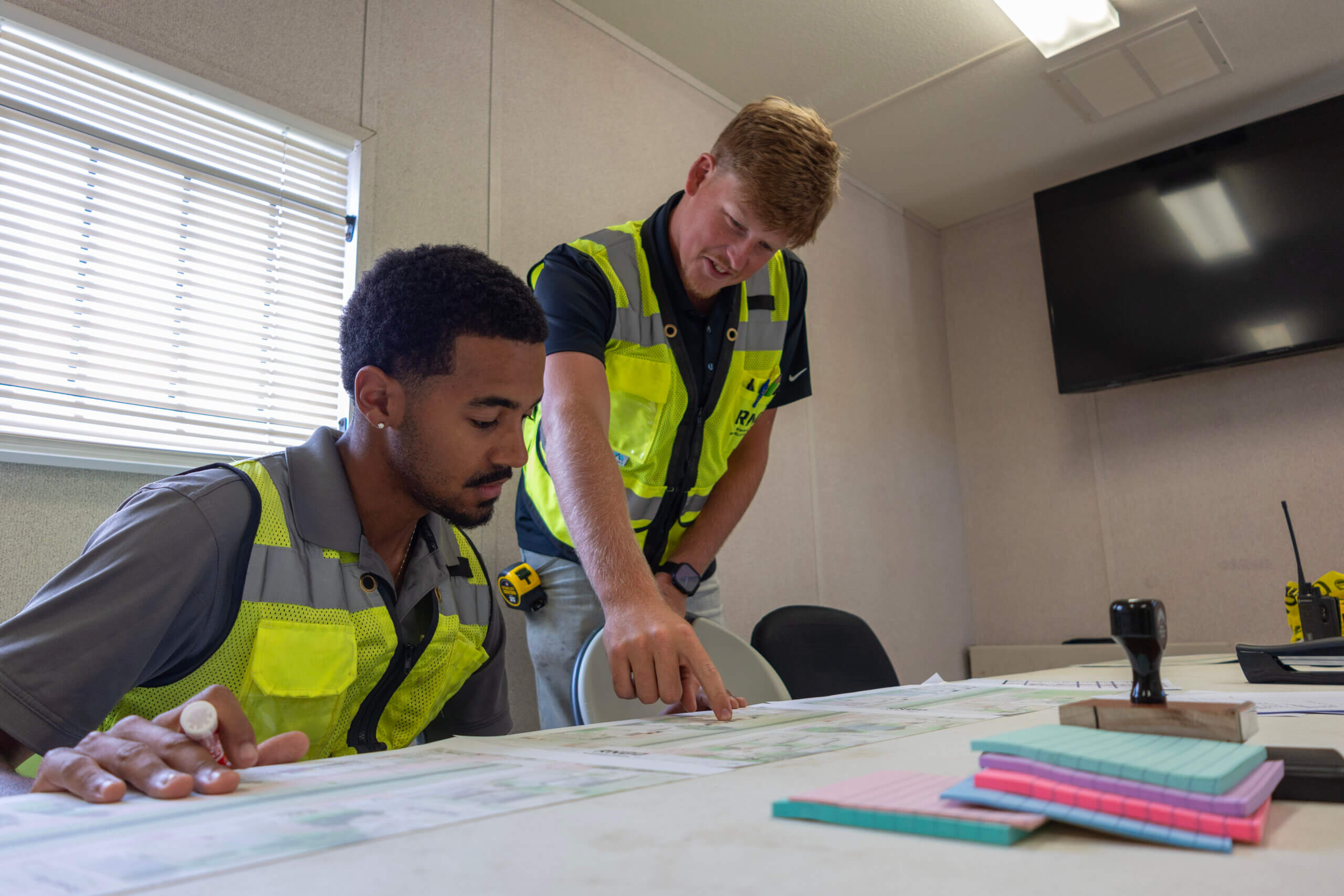
There is a romance to the idea of working full-time through college. The reality is less romantic. It looks like this: a 10-hour day in Louisiana heat. A drive home that for Penton stretches an hour and a half on a good day, two hours depending on the jobsite. A shower to get the concrete off. And then, somewhere around 9 p.m., the laptop comes out. Five hundred words due before bed.
“The hardest part is staying disciplined on those nights,” Penton said. “You take a shower, and oh, I’ve got an essay to write before I go to bed.”
Margan describes the same balancing act. Late-night calls to his project manager, Michael Pou, when an assignment is due and he can’t make it click. Doubts that come and go.
“It’s been hard, and I’ve doubted myself,” Margan said. “But the support system I have, I’ve been able to get through and meet the goals I’ve set for myself.”
That phrase, “the support system I have”, is the part of the story that matters most.
Why RNGD
Both engineers will tell you, unprompted, that RNGD is the reason any of this is possible.
The flexibility is real and concrete. If Penton has a final, he can sit down with Pou the day before and study. If Margan needs to leave early to take an exam, he leaves. When he started full-time, Sector Leader Bret Ellis and others made the policy clear from day one. “If you need to take off, if you need to go to school, if you need to take some time to study, just let us know,” Penton recalled them saying. “No problem.”
But the support runs deeper than schedule accommodations. It shows up in the way the team teaches.
“Half of these guys went to LSU,” Margan said. “They took the exact same classes I’ve taken, and they’ve never second-guessed helping me. It’s been times I’ve called Pou at 8 o’clock and I’ve got an assignment, and he’s helping me out.”
He rattles off names like a roster: Michael Pou, Luke Rau, Brandon Penton, Christopher Cowie, Chris Rowan, Bret Ellis. Every one of them, he said, has invested in his development. Every one of them has pushed him. One of the lessons that shaped him most came from that group: never come to your boss with a question, come with two answers first.
“The overall theme is to apply yourself and really try to think it out,” Margan said. “Problem solve.”
What the company sees
From leadership’s vantage point, what these two are doing is rare and worth saying out loud.
“Most people don’t understand the commitment and discipline it takes to take a full college course load while working full time, especially in the high demand industry they have chosen,” said Bret Ellis, Sector Leader for Heavy Civil and Bridges. “They are utilizing some critical time management skills, and I look forward to seeing them succeed in reaching the goals they strive for in their careers.”
Pou, who works with both engineers daily and has watched them grow from raw talent into trusted hands, put it this way: “Isaiah and Makade consistently demonstrate a level of discipline and commitment that sets them apart. Balancing full-time roles while remaining fully engaged in their academic pursuits is no small task, yet they manage both with focus, accountability, and a strong sense of ownership over their work. Their ongoing development continues to surprise me as they advance both their academic and professional careers.”
The trust is mutual, and it shows on the work itself. Penton tells a story about a recent Monday morning when two material orders failed to arrive on time. The old version of him might have sent the crew home. The current version walked his foreman through a different plan, kept the crew productive, mapped the schedule slip, and got ahead of it.
“Being proactive, looking into the future, seeing what we can do to be prepared,” he said. That is project management. He is 20.
Margan tells his own version. “In a sense, I’m running this project from a management standpoint,” he said. “You have to be on your toes all the time.”
The road ahead
Margan has already mapped his next decade. Assistant PM. PM. Senior PM. Maybe team leader. He’s also discovered a niche that lights him up: mechanical work. Pumps. Screens. Drainage. The kind of project where you can point to something humming in the ground and say, I built that.
Penton is just as serious. Keep growing. Keep learning. A few more projects under his belt. Earn the trust he’s been given.
That trust is the whole story. They earned their seat. RNGD pulled it out for them. And every late night, every hard exam, every project they help bring in on schedule is one more reason the bet is paying off, on both sides.
They are not waiting until graduation to start their careers. Their careers started the day someone at RNGD looked at them and said, we believe you can do this. Now go do it.
They are.
![FOR IMMEDIATE RELEASE MEDIA CONTACT: Michael Fulkerson, Marketing Director | mfulkerson@rngd.com Louisiana Construction Leader Michael Pittman Comes Out of Retirement to Join RNGD [New Orleans, La.] — August 5, 2026 — RNGD, a high-growth diversified construction firm serving the Southeastern United States, today announced Michael Pittman has joined the company as Senior Advisor, Heavy Civil. Pittman will advise RNGD's leadership team on the continued expansion of its Heavy Civil platform, helping develop talent, strengthen operational excellence, and support the company's long-term growth strategy throughout the Southeast. A 1983 civil engineering graduate of Louisiana State University, Pittman is a third-generation builder who spent more than four decades leading heavy civil and infrastructure work across south Louisiana. He founded M.R. Pittman Group, LLC in 2003 and built it into one of Louisiana's premier heavy civil contractors. Over the course of his career, he oversaw approximately $1.5 billion in infrastructure and construction projects, including the GIWW West Closure Complex, the world's largest pump station of its kind, constructed for the U.S. Army Corps of Engineers as part of southeast Louisiana's hurricane and flood protection system. Pittman had stepped back from day-to-day operations in recent years before deciding to return to the industry full-time with RNGD. Mentorship was central to his decision to join. Having spent his entire career working alongside family, Pittman says this marks a new chapter. "The more time I spent with RNGD's leadership team, the clearer it became that this is an organization with tremendous potential," Pittman said. "I still have a lot to contribute to this industry, and one of the most rewarding parts of my career has always been helping people grow. RNGD is building something special, and I'm excited to share what I've learned while continuing to learn alongside this team." "Mike represents the very best of our industry," said Wes Palmisano, Founder and CEO of RNGD. "His experience, reputation, and commitment to developing people align perfectly with our culture and our vision for growth. We are honored that he chose RNGD for this next chapter, and we look forward to the impact he will have on our team, our clients, and the future of our Heavy Civil business." Pittman's appointment comes as RNGD continues to expand its Heavy Civil capabilities across the Southeastern United States, investing in people, expertise, and strategic partnerships to support complex infrastructure and resilience projects throughout the region.](https://rngd.com/wp-content/uploads/2026/08/Website-News-Headers.jpg)