Mid City Lofts
Size of Project
42,000 SF
Number of Units
46
Location
Lake Charles, LA
Owner
HRI Communities
Industry
Multi-Family
Type
New Construction
Status
Completed in 2025
Architect
HCI Architecture
Overview
Why Mid City Lofts Mattered
Mid City Lofts was never just about replacing housing. It was about helping Lake Charles move forward after loss—intentionally, responsibly, and with long-term resilience in mind. Following Hurricanes Laura and Delta, entire neighborhoods were displaced, including the former Lloyd Oaks public housing community. What was left behind wasn’t just damaged buildings, but a fractured sense of stability.
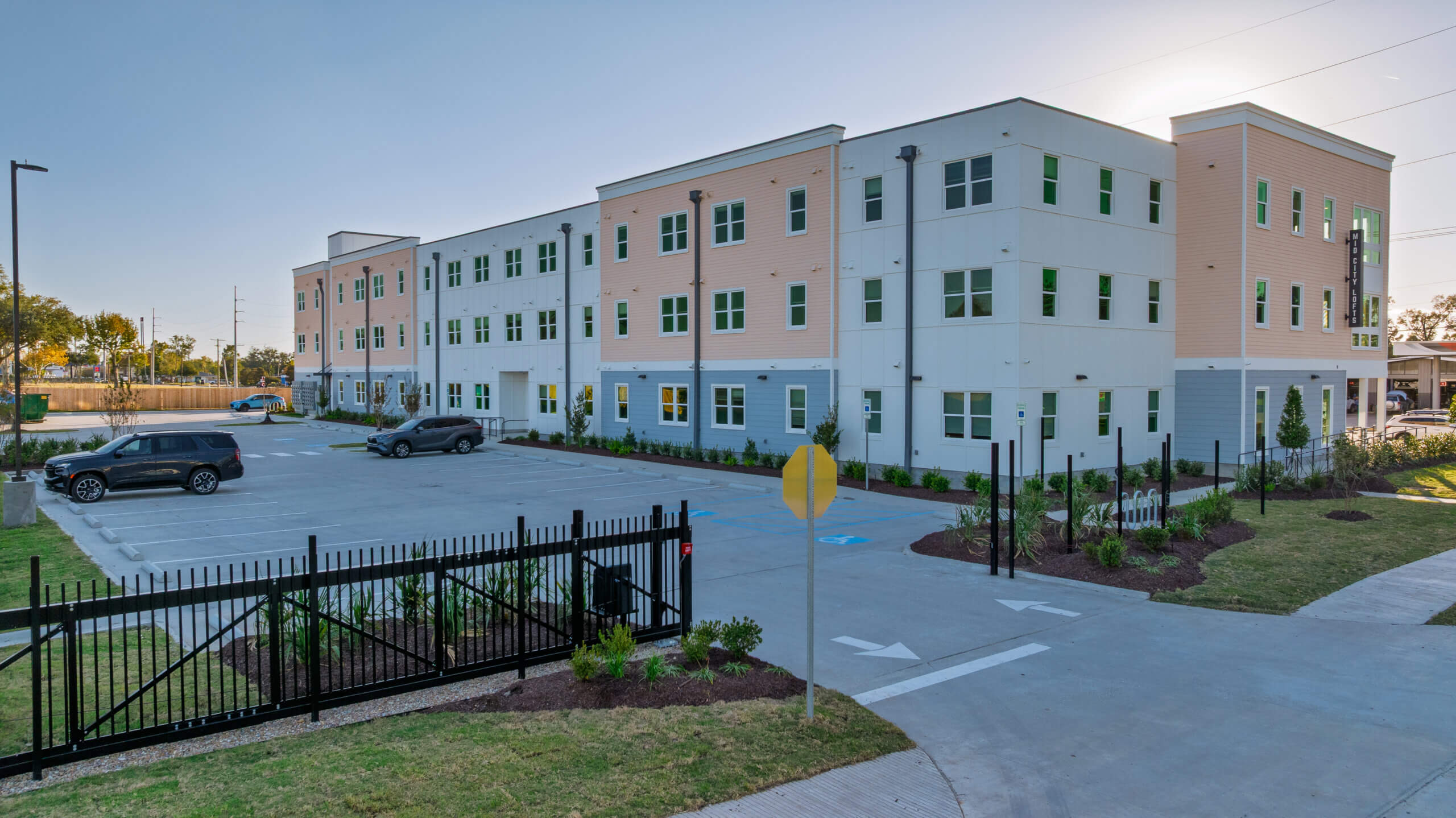
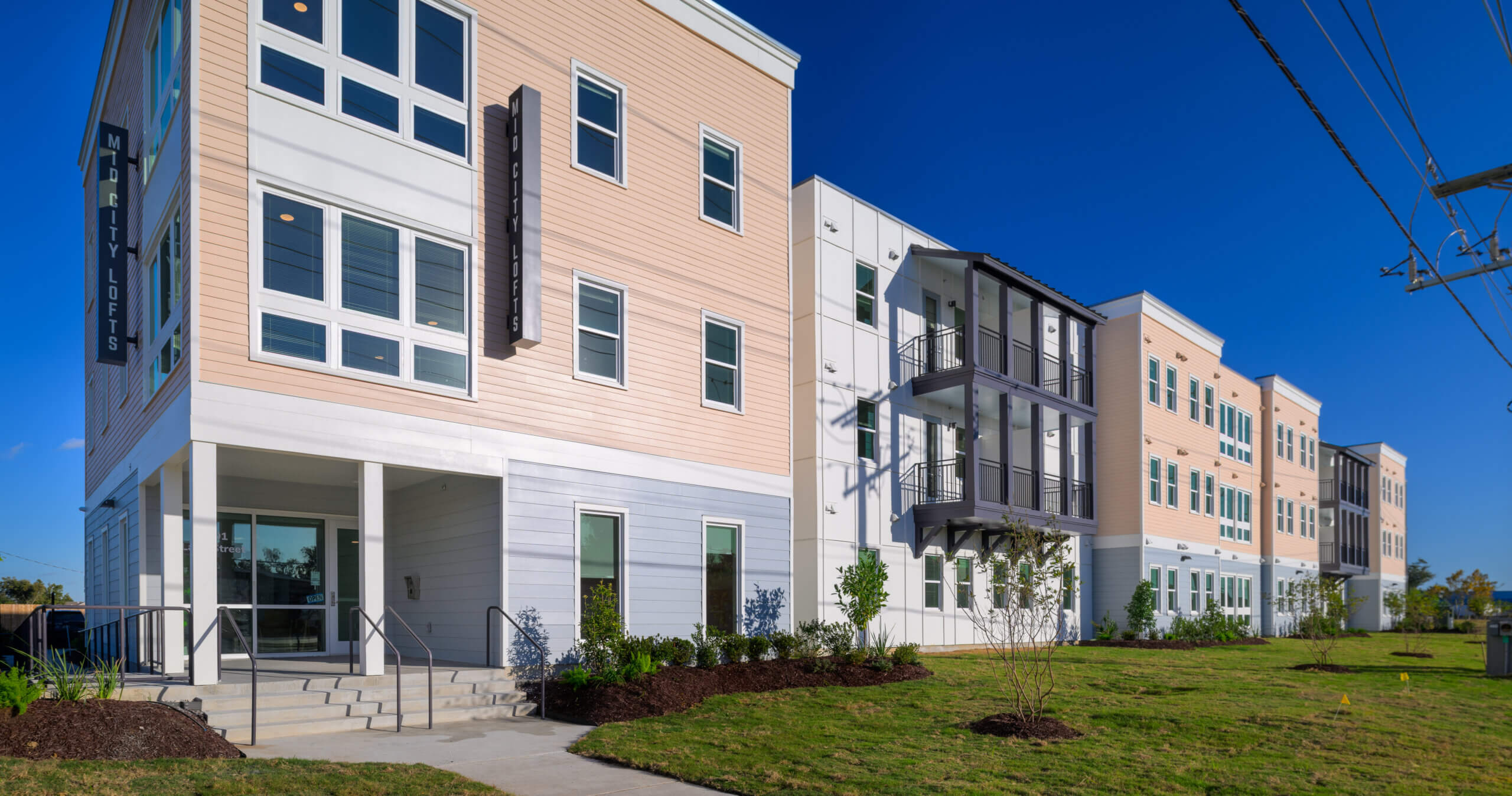
As the first completed phase of the Mid City Choice Neighborhoods Transformation, Mid City Lofts set the tone for what recovery could look like. Developed by HRI Communities, the three-story, 46-unit mixed-income development was designed to provide safe, durable housing while establishing a new standard for storm-resilient, community-centered design. The goal was straightforward: build something that would last, support residents through future storms, and strengthen the neighborhood—not just restore it.
Designing for Resilience From Day One
Resilience wasn’t layered on at the end. It was embedded into every design decision from the start. Working alongside HCI Architecture, the team designed Mid City Lofts to meet both FORTIFIED Multifamily Gold and Enterprise Green Communities standards—two of the most demanding certifications in affordable housing.
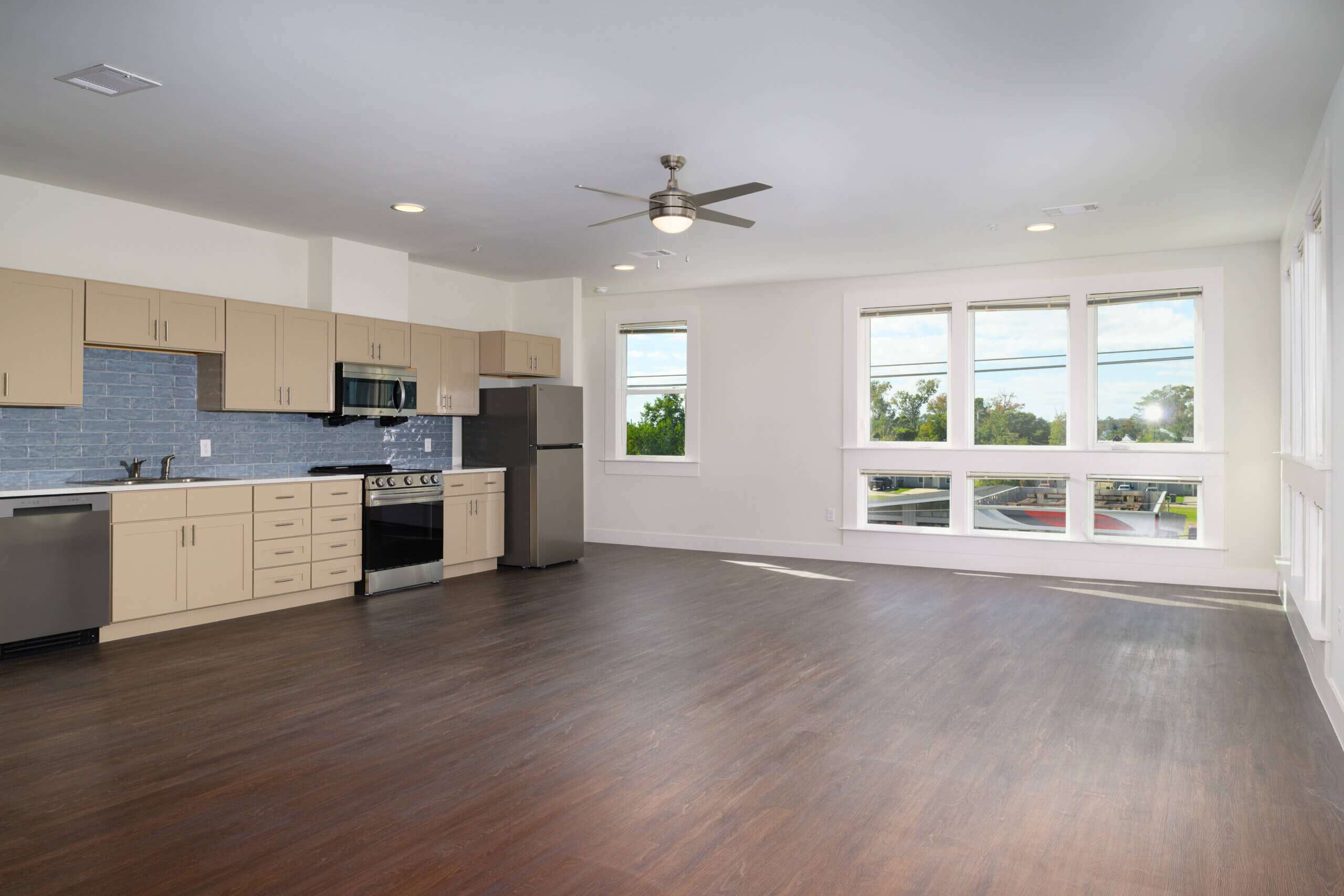
That meant impact-rated windows and doors capable of withstanding 130-mph winds, a continuous load path from roof to foundation, and enhanced roof attachment systems designed to stay intact during extreme weather. The first floor incorporated flood-resistant materials like polished concrete and dense wall assemblies, allowing the building to recover quickly if flooding occurs rather than requiring full reconstruction.
These strategies weren’t theoretical. They were informed by lived experience in Lake Charles—and focused on reducing displacement, shortening recovery time, and protecting residents when the next storm comes.
What It Means for the Community
Mid City Lofts delivers more than 46 apartments. It delivers stability. Twenty-five units welcome former Lloyd Oaks residents home after years of displacement. Others provide workforce housing, permanent supportive housing, and market-rate units—creating a mixed-income model that supports long-term neighborhood health.
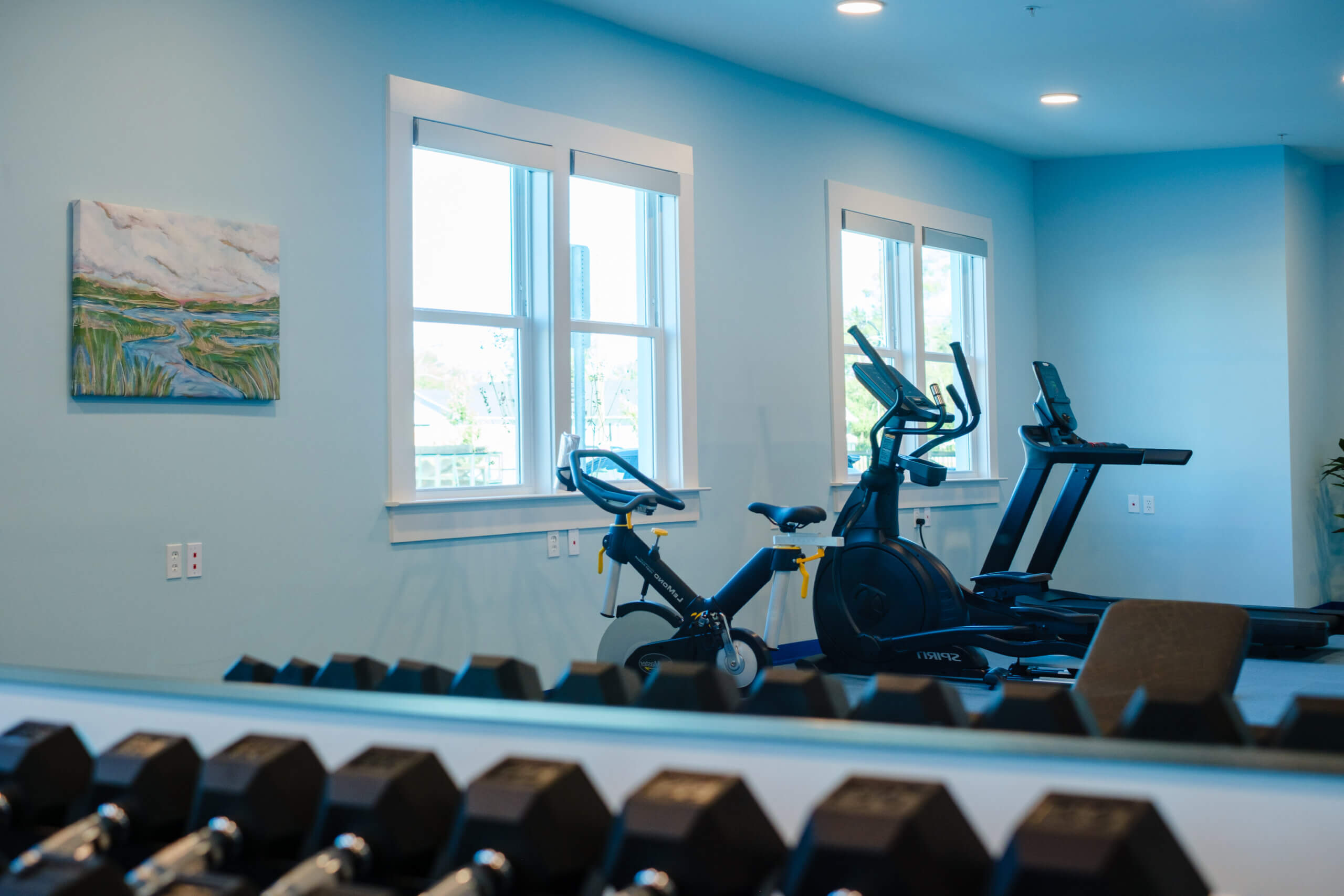
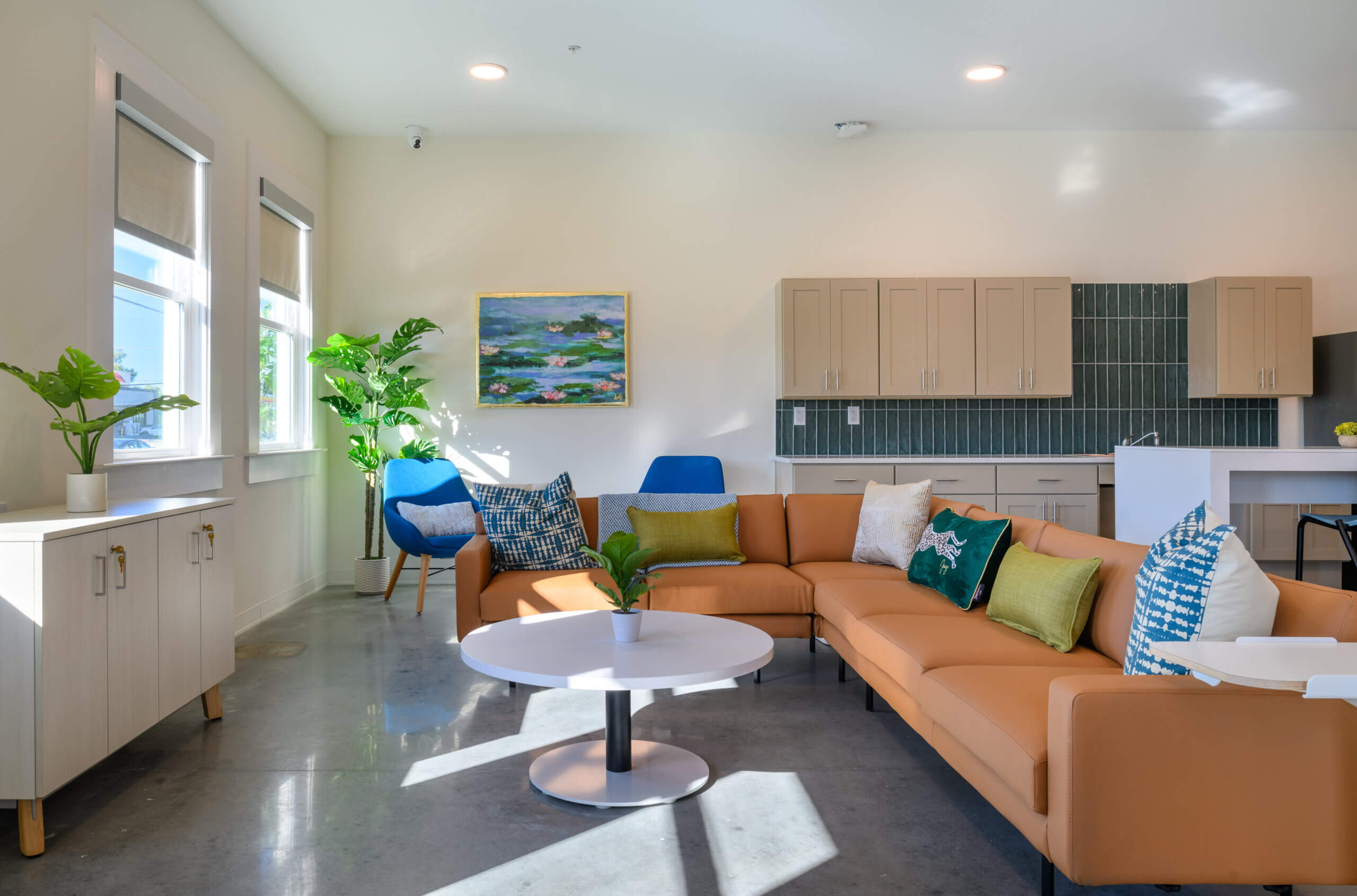
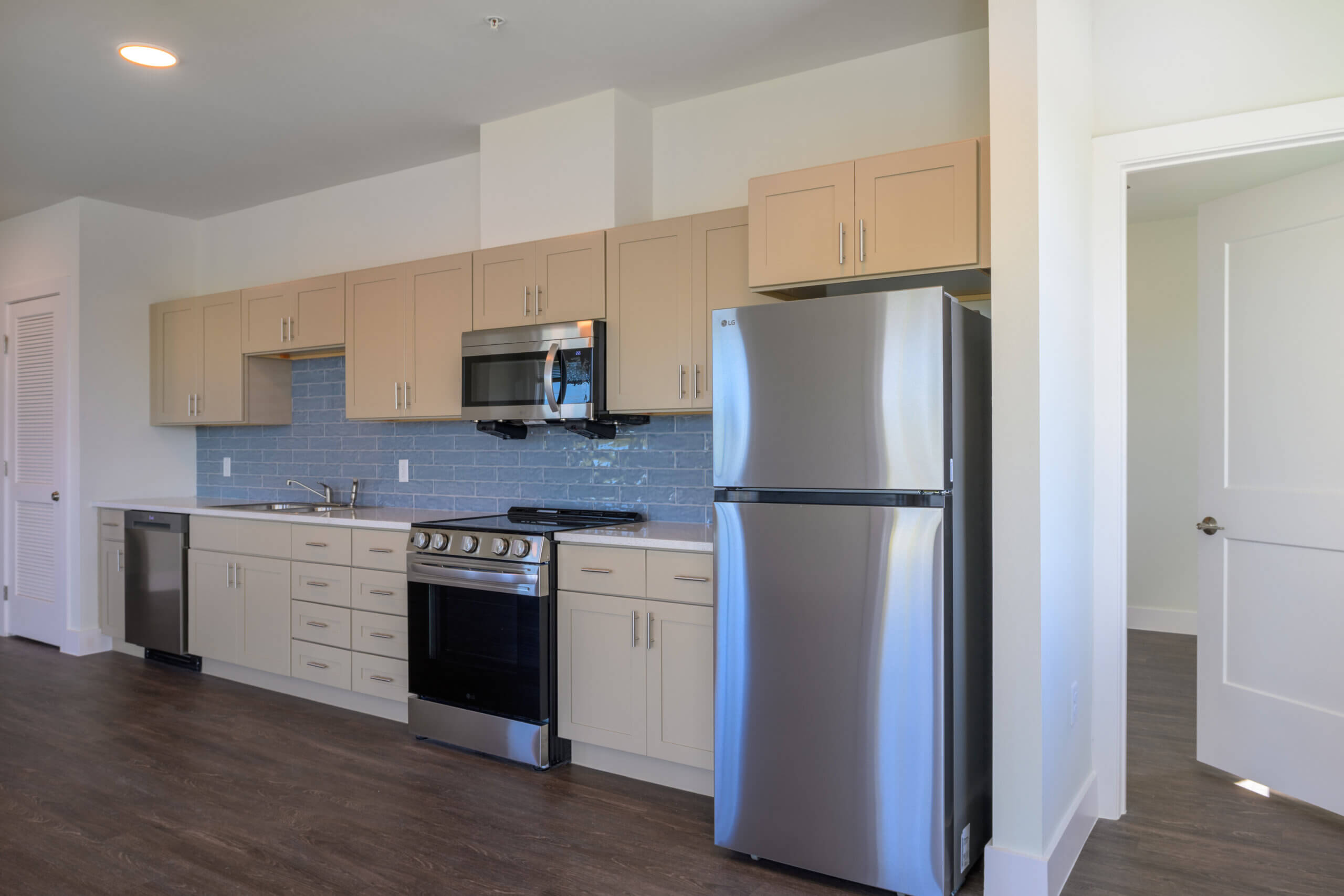
Residents benefit from resilient construction, lower energy costs, and amenities that support daily life: in-unit laundry, a community room, fitness center, computer lab, and secure parking. More importantly, they gain peace of mind knowing their homes are built to withstand future storms.
As the first completed phase of a broader transformation, Mid City Lofts proves recovery can be intentional—and that resilient design, disciplined execution, and community focus can create housing that lasts. For Lake Charles, it’s not just a milestone. It’s a foundation for what comes next.
Integrated Delivery, Real Continuity
Mid City Lofts was delivered through a design-build approach that prioritized continuity and accountability. RNGD worked closely with HRI Communities and HCI Architecture throughout preconstruction to align budget, certification requirements, and constructability early—avoiding late redesigns and field surprises.
A key advantage was continuity of leadership. The project benefited from continuous leadership, with the same team member supporting the work from early preconstruction through on-site execution—preserving design intent, budget alignment, and team coordination throughout.Instead of a traditional handoff, the same voice and understanding carried through every phase.
That continuity strengthened trust with the owner, design team, and trade partners—and ensured decisions made early were honored in the field. It also allowed the team to move quickly, resolve issues decisively, and maintain alignment across all stakeholders throughout the 12-month schedule.
Building Smarter, Building Stronger
Meeting FORTIFIED and Enterprise Green Communities standards required disciplined execution in the field. RNGD implemented layered quality control processes, detailed testing protocols, and clear sequencing to ensure performance matched design.
Energy efficiency was treated as a life-cycle benefit, not a checkbox. Spray foam insulation at the roof deck, blown-in wall insulation, sealed penetrations, and Energy Star-rated systems created a tight building envelope that improves comfort and lowers utility costs for residents. Every unit underwent blower door and airflow testing to verify real-world performance.